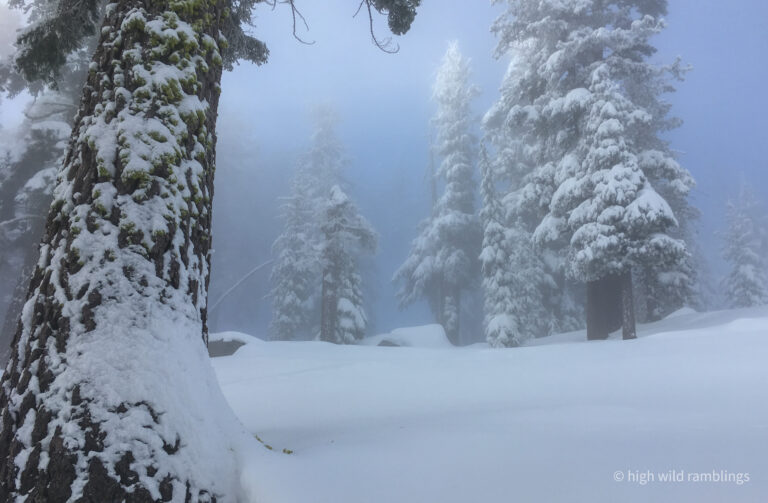
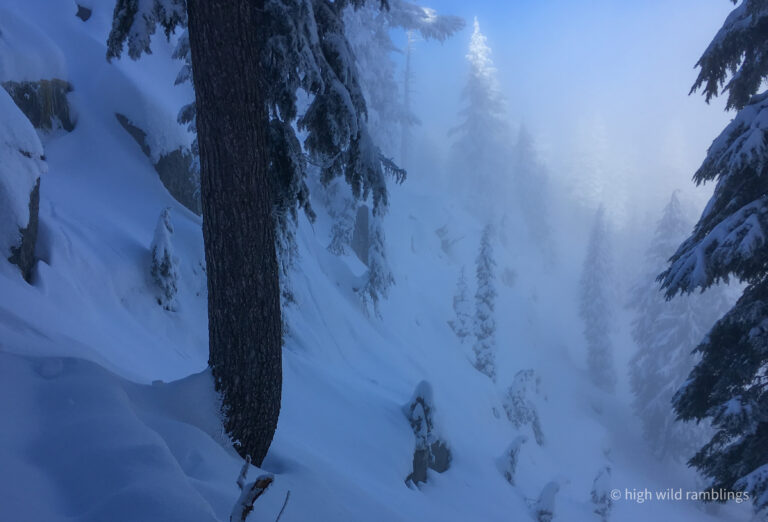
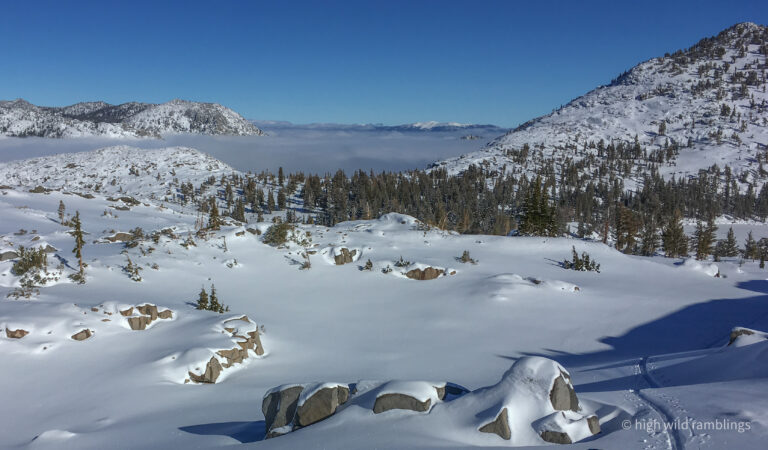
We awoke in a fog, our world close and gray, but knowing from experience that the peaks were bathing in the sun, above the surface of this low-hanging inversion cloud. But first we must climb up through it.
Nearing the top of the inversion cloud we can see the blue above leaking through.
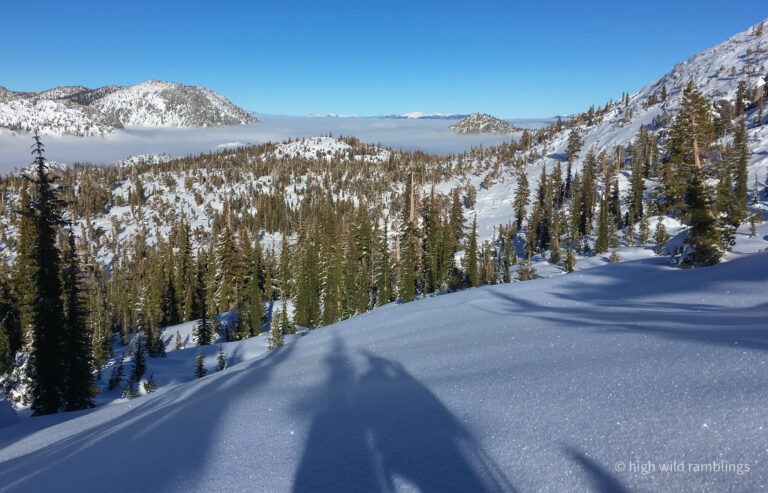
tree tops poking their heads up through the cloud into the sun
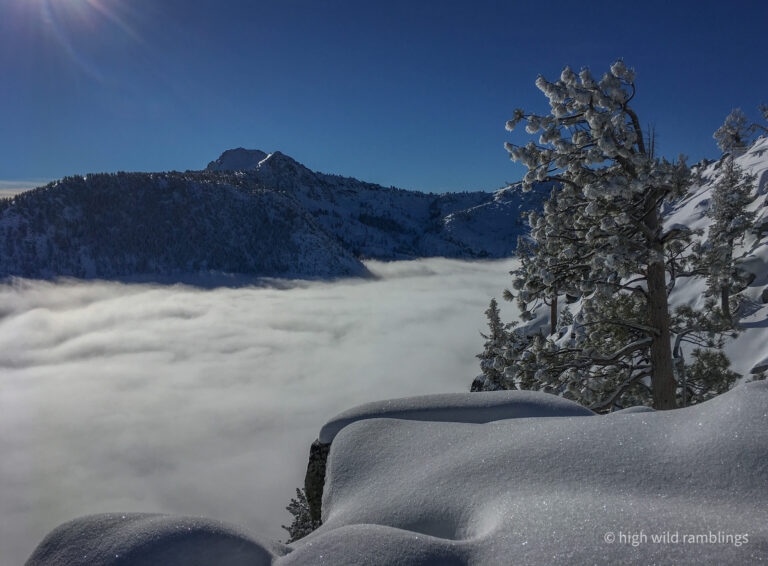
Inversion refers to a layer of warm still air trapping cold air beneath it in the basin, forming this cloud deck.
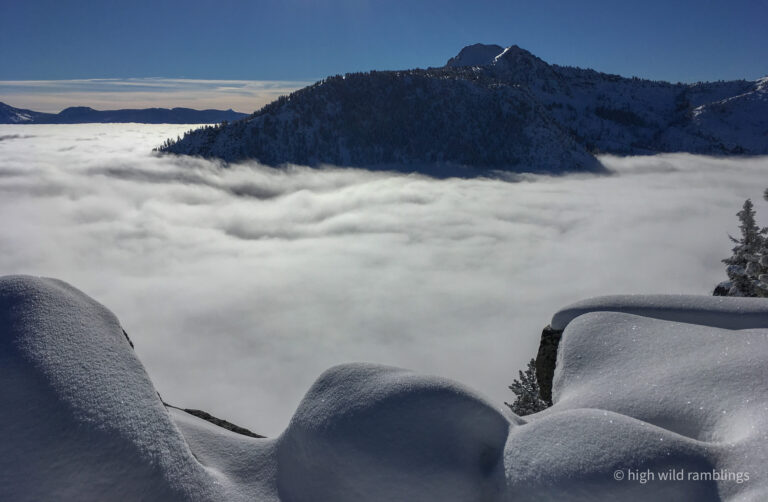
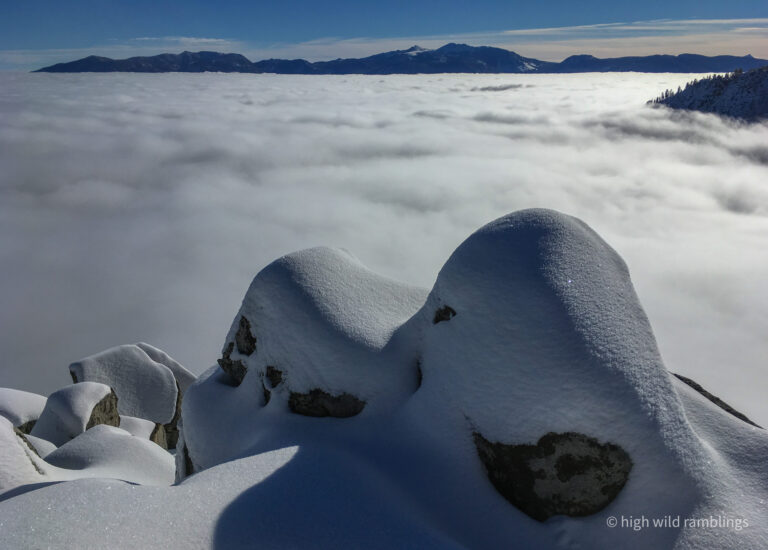
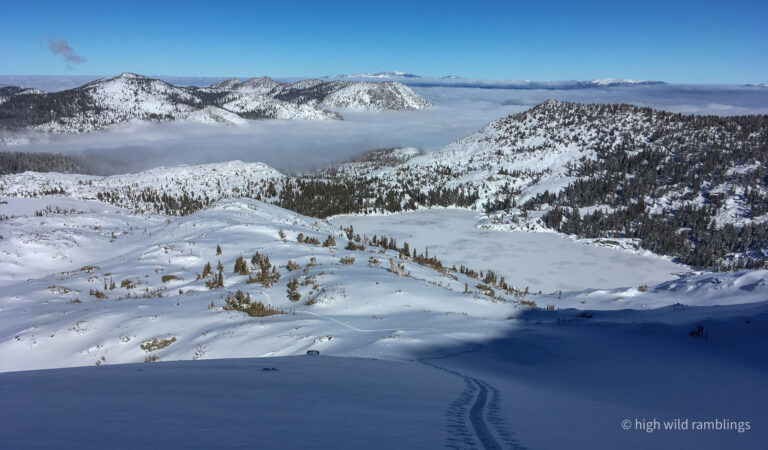
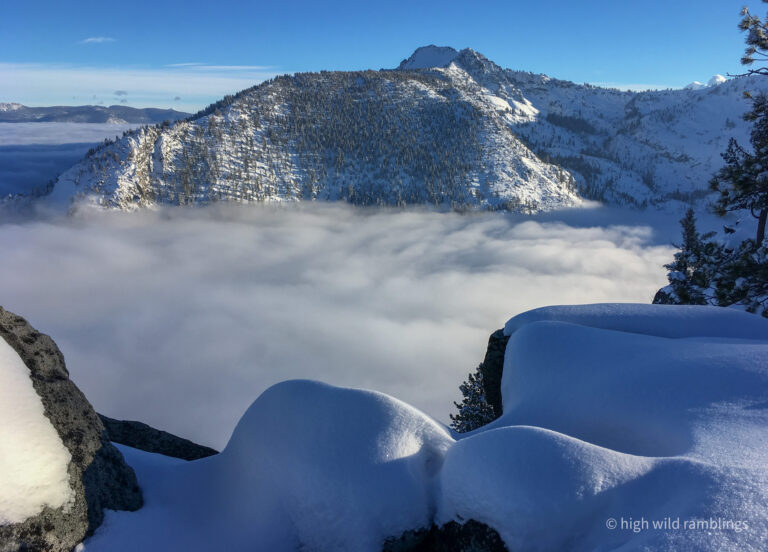
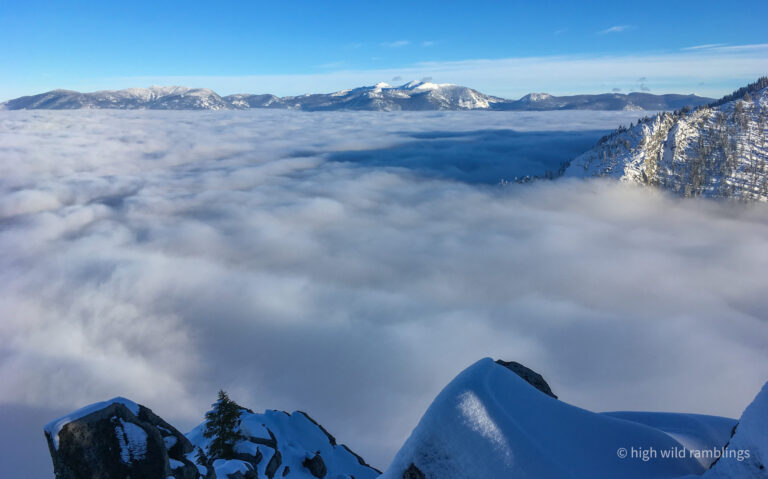
This cloud layer looks almost glacial, filling the canyon a thousand feet deep, like you could just step right out onto it. You’d need some fancy skis for that maneuver.
These inversion layers lend a primeval otherworldly appearance to our familiar landscape, like looking out the window of an airplane.
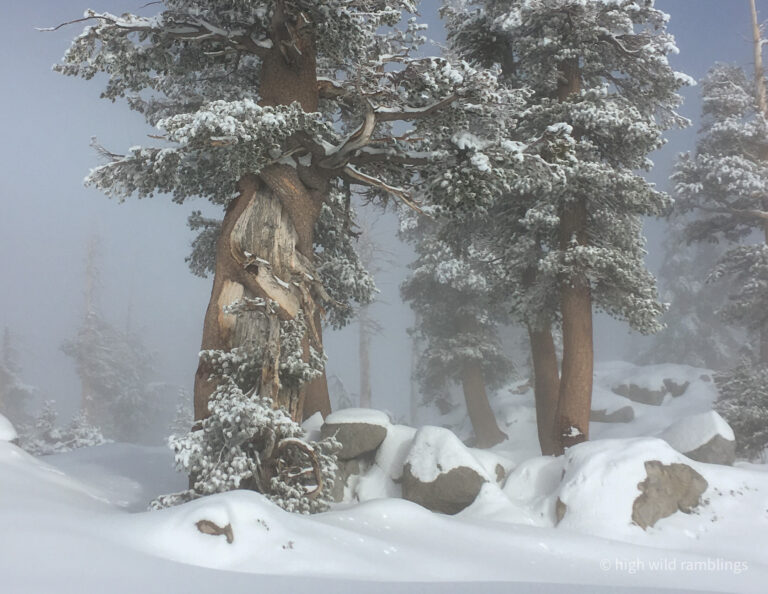
Big old Western White Pine with characteristic taper, and some dramatic scars, likely where limbs have been torn off by excessive snows.
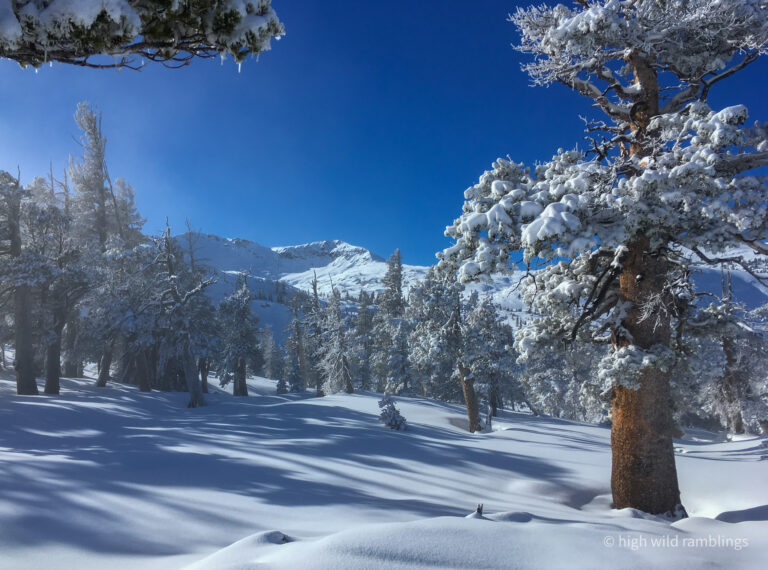
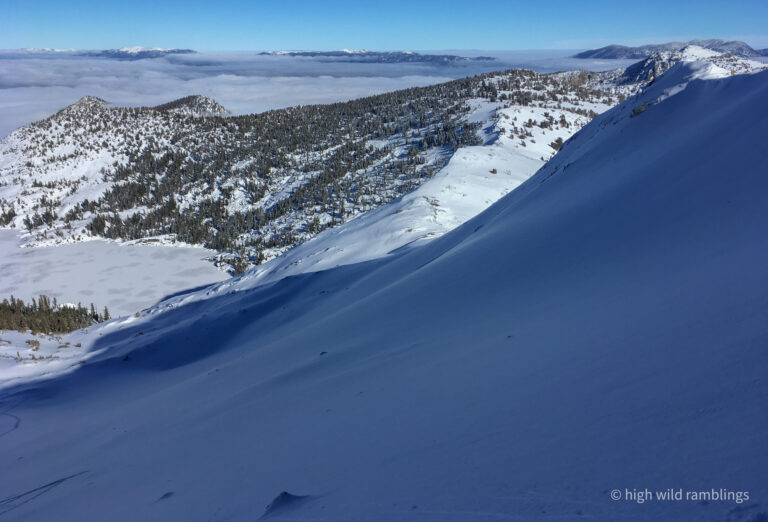
Contrary to appearances, there was just a few inches of powder on a firm crust, what we call ‘dust on crust’ or in this instance deep dust on crust, and we had to feel our way up the mountain with our skin track, tracing a slightly deeper swath in the gut of the slope, tacking till the bit of new was diminished to where we could no longer get purchase on the crust below, then switching back to stay in the groove. We went as high as we could this way, but ran out of goodness a hundred feet below the summit, much to my partner’s chagrin. He was clever enough to just ski down our track where we had already determined the most new snow lay. Myself not so much.
The civilization erasers. see pix from 12-3-2021 or 12-7-2022 for a look at what lies beneath
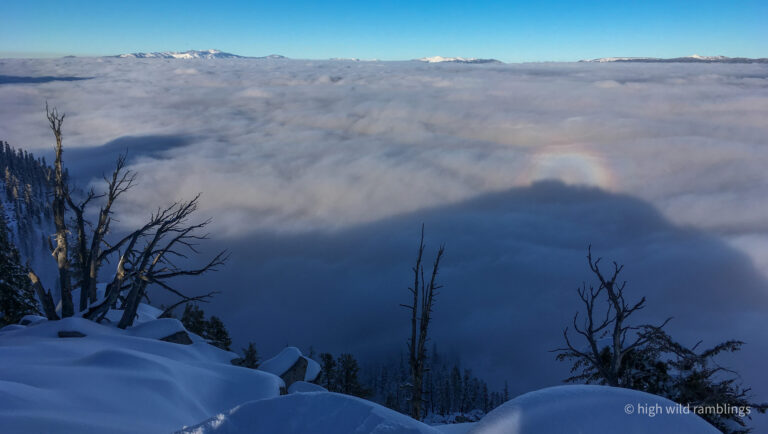
This optical phenomenon is called a glory halo, caused by water droplets in the cloud and the sunlight shining down on the surface below us, though the shadow of my head peeking over the mountains’ shadow is apparently lost at this distance.