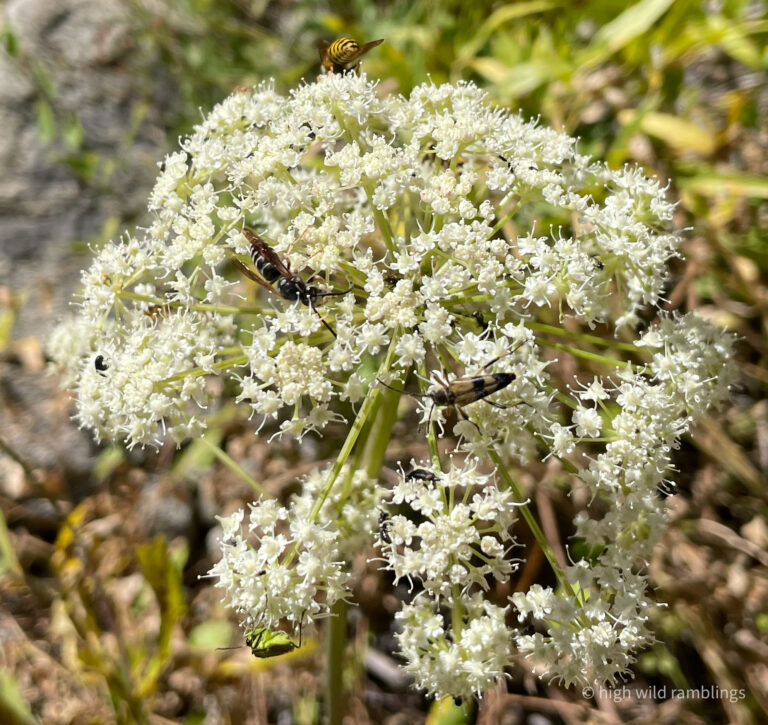
Brewer’s Angelica (Angelica breweri), Apiaceae family
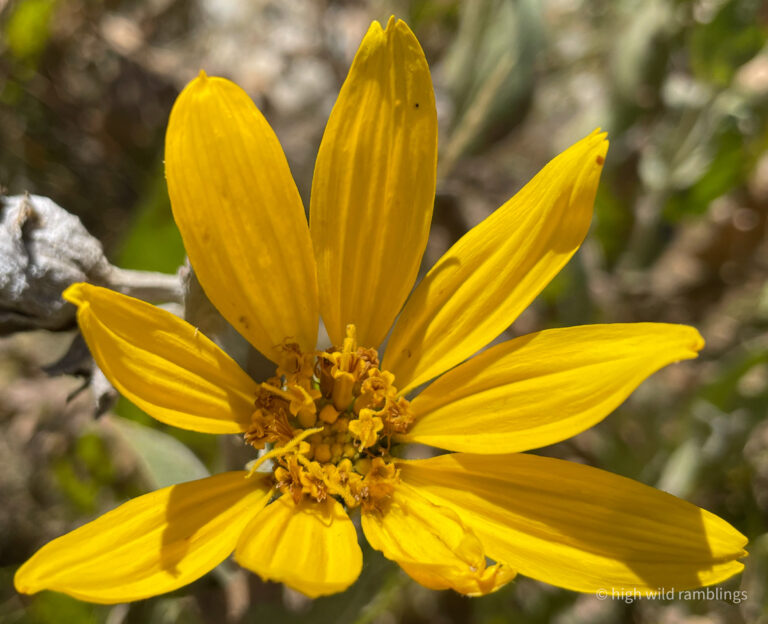
Woolly Mule’s Ear (Wyethia mollis), Asteraceae family
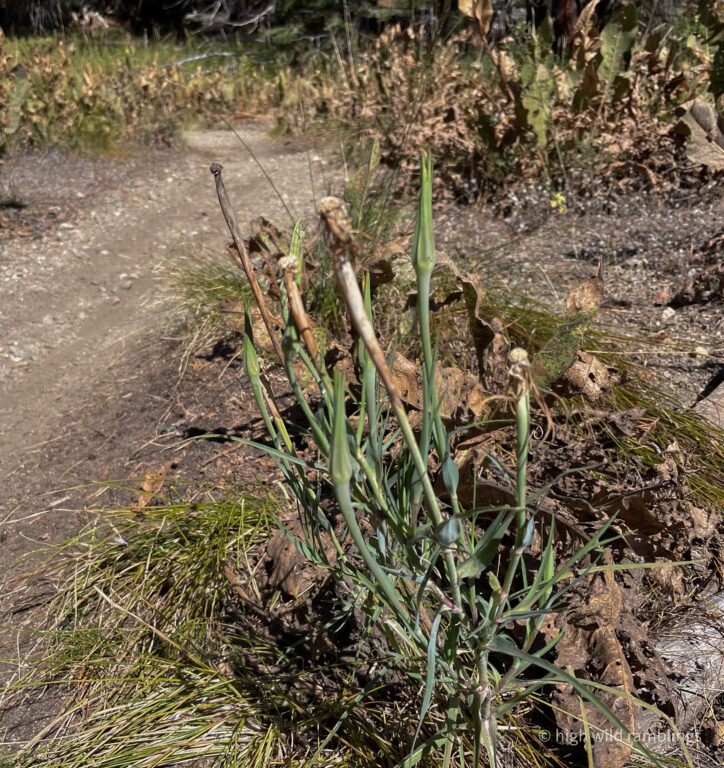
likely Orange Flowered Agoseris (Agoseris aurantiaca), frequently found in this meadow, which also has large spherical seed heads not to be confused with Tragopogon dubious.
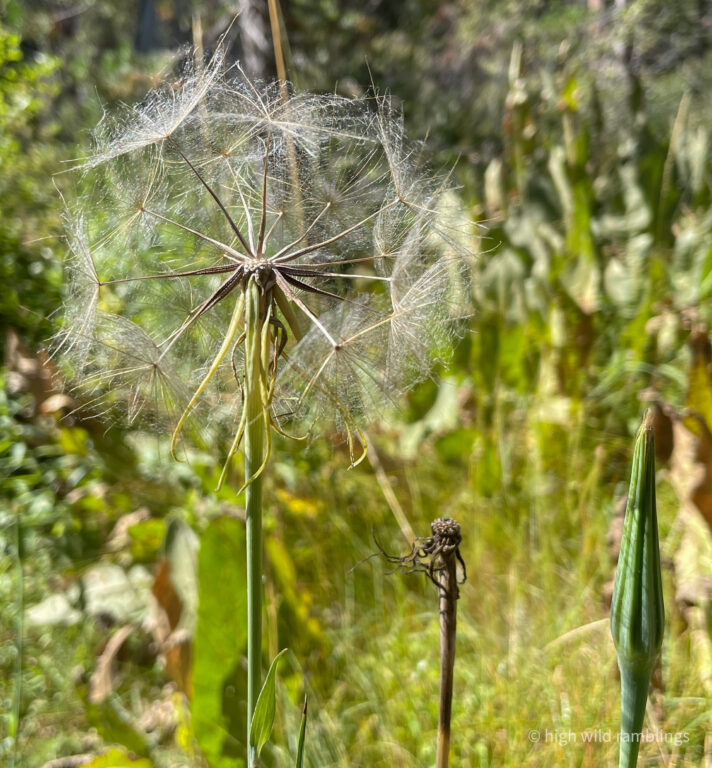
Miles up canyon, I spotted this plant beside me with a jolt, this aggressive non native I’ve spent so much time removing around the shore and the neighborhoods, and other ‘improved areas’, but seeing it here miles beyond the nearest road is just wrong. It hurts inside. But how? Could the winds really blow it over such an expanse of forest? Here beside the trail, other vectors come to mind. Hikers? bikers? dogs? bears? I’ve seen weeds around springs up here where humans seldom visit but where bears have beaten their own paths from frequent use. But the bears didnt bring this species from Europe. So either way, we own this. Goatsbeard or Salsify (Tragopogon dubius), is a vigorous and beautiful plant with a long history of association with humankind, which is why it was brought here in the first place. But it is alien to these subtly balanced ecosystems here, these dry meadows, remnants of glacial terminal ponds where the accumulated well-drained sediments atop scoured bedrock do not support forest, and so the flowers and grasses can flourish, during the short growing season, supporting particular bugs and the critters that feed on them. Tragopogon is a stranger here, with no established relationships. They take up valuable resources without contributing to the community. They have no ability to just introduce themselves around and learn how to interact with the locals, this is not a society of peoples, this is an ecosystem of species that have evolved in sympathy over ridiculous expanses of time. Tragopogon arrives like an explosion. I pulled 124 plants here today, and another 40 in the next meadow down canyon. And I have returned here weekly from May through August for the years since, slowly eliminating their population, and their lingering presence in the seed bank, reclaiming this little space for those who are intrinsically of this place, in time. Because sometimes intent is about restraint, and creativity about what you remove.
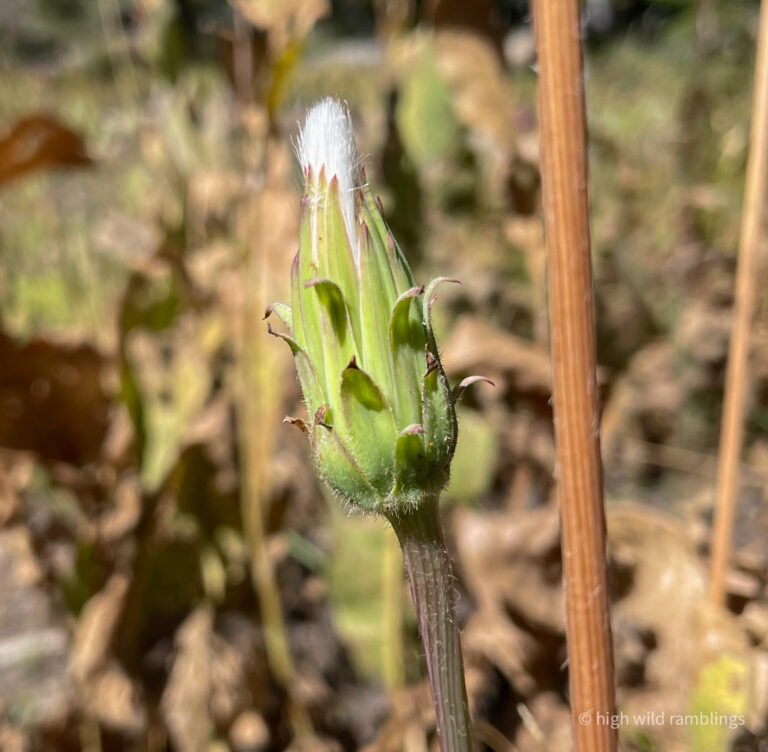
Goatsbeard or Salsify (Tragopogon dubius), Asteraceae family, invasive non native. The common name apparently refers to the Goatsbeard of the ripening seeds protruding from the closed inflorescence, as seen at right, before it opens into a globe to sow its fruit.
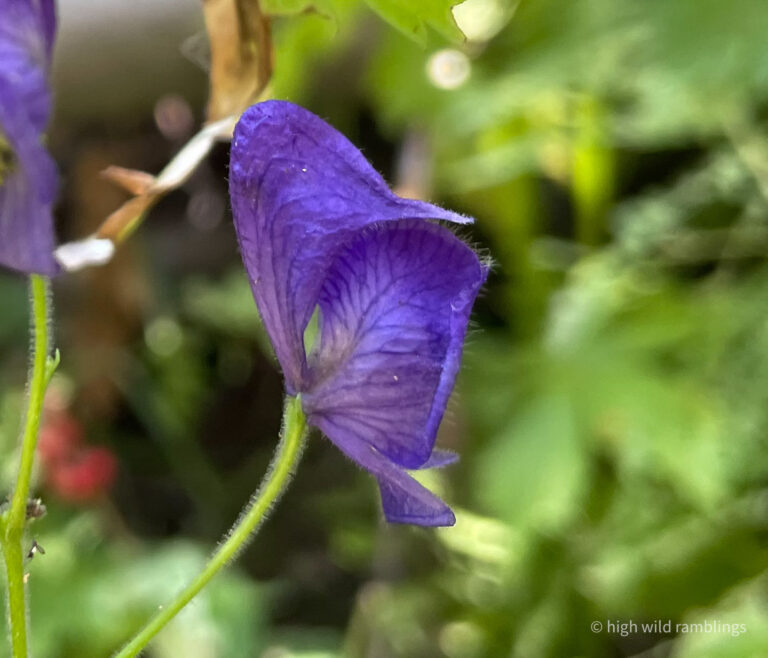
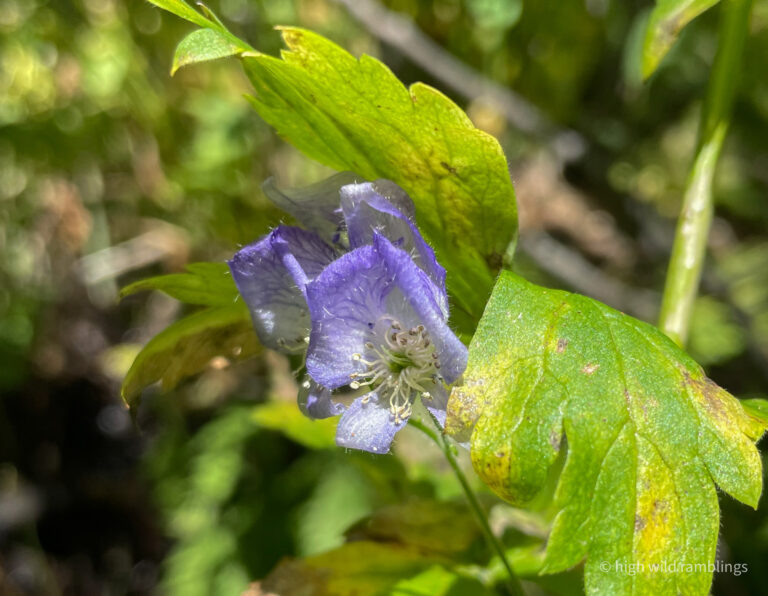
Monkshood (Aconitum columbianum) Ranunculaceae family
Monkshood (Aconitum columbianum) Ranunculaceae family
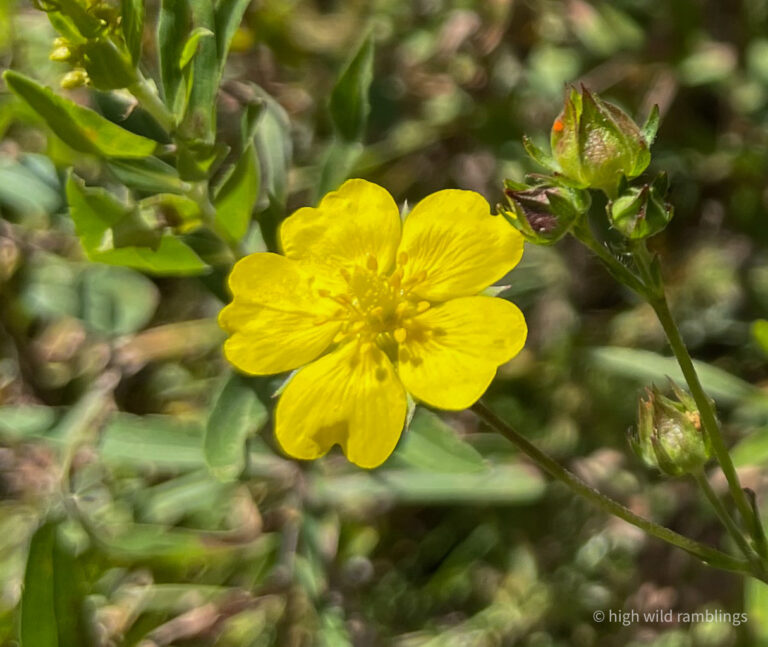
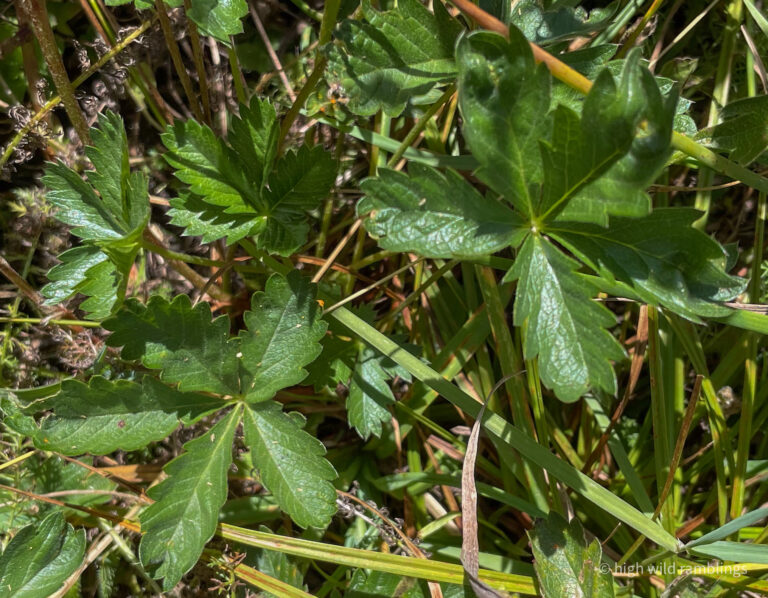
Slender Cinquefoil (Potentilla gracilis var. fastigiata), Rosaceae family, foliage
Slender Cinquefoil (Potentilla gracilis var. fastigiata), Rosaceae family, foliage
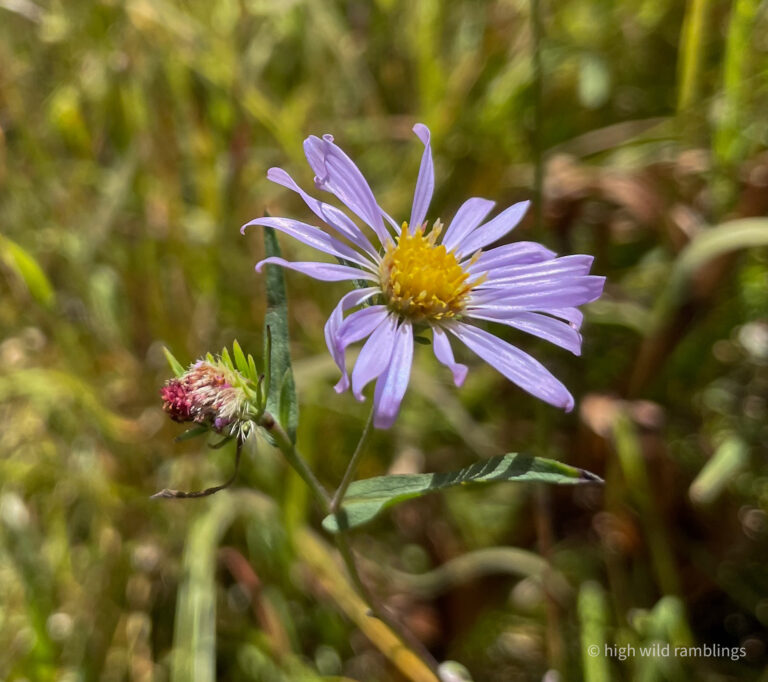
Longleaf or Western Aster (Symphyotrichum ascendens), Asteraceae family
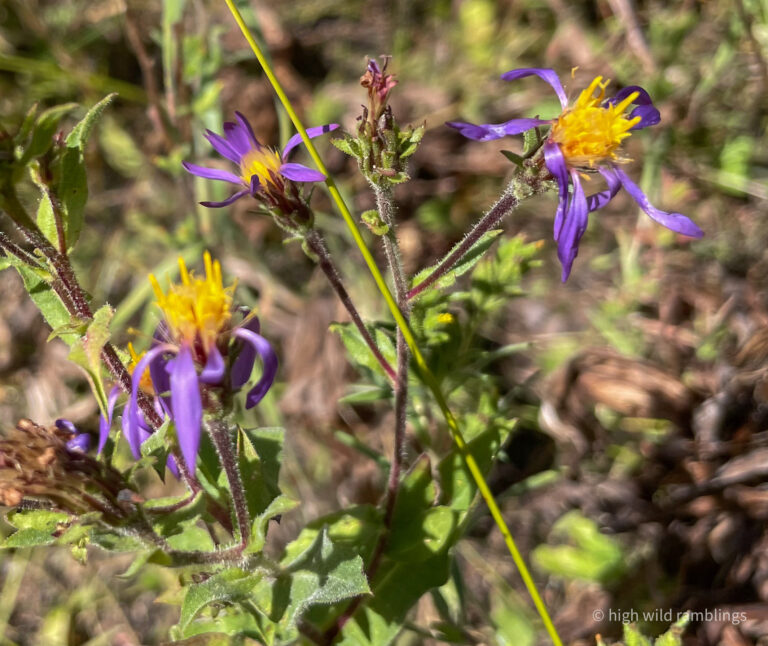
Thickstem Aster (Eurybia integrifolia), Asteraceae family, Asteraceae family
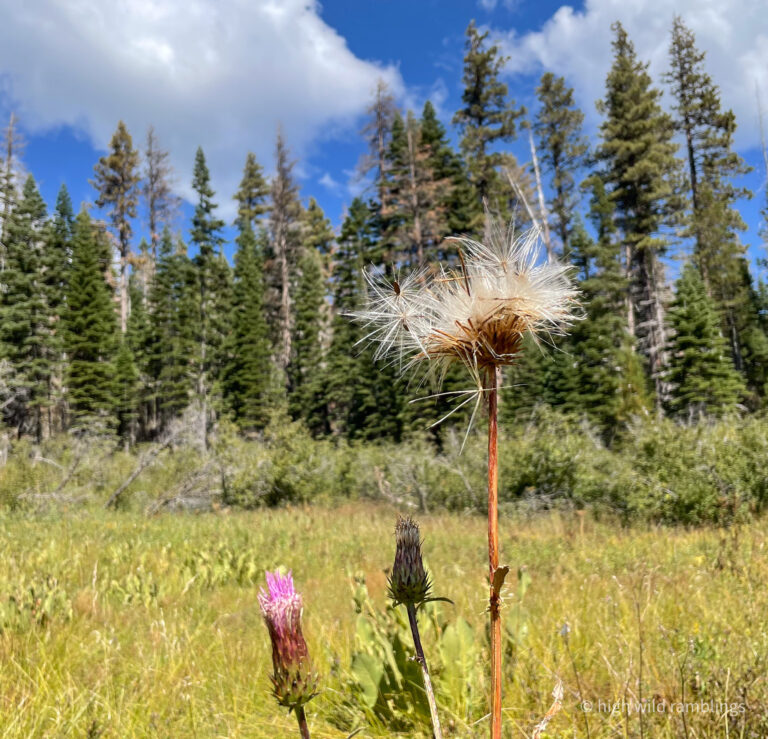
Andersons Thistle (Cirsium andersonii), Asteraceae family
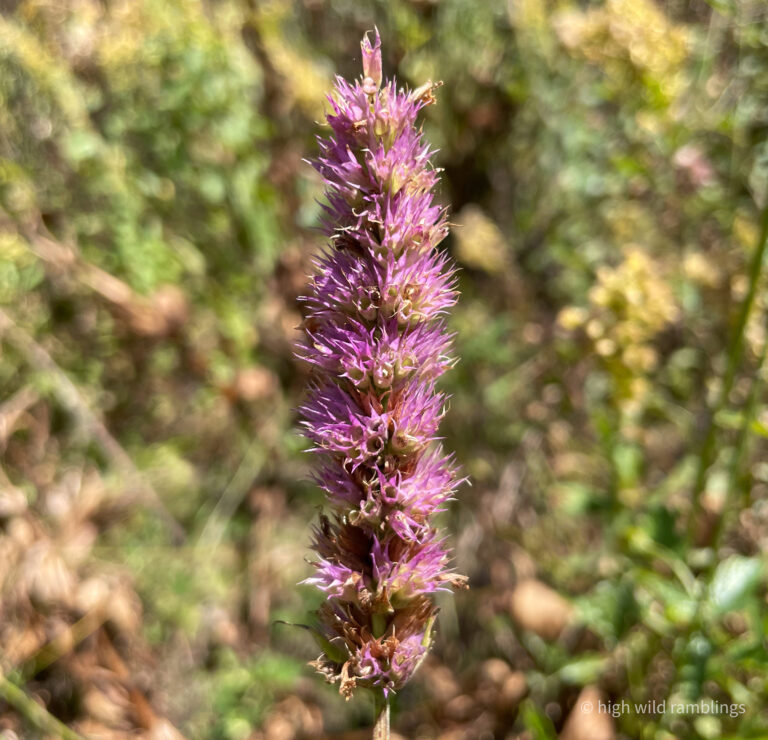
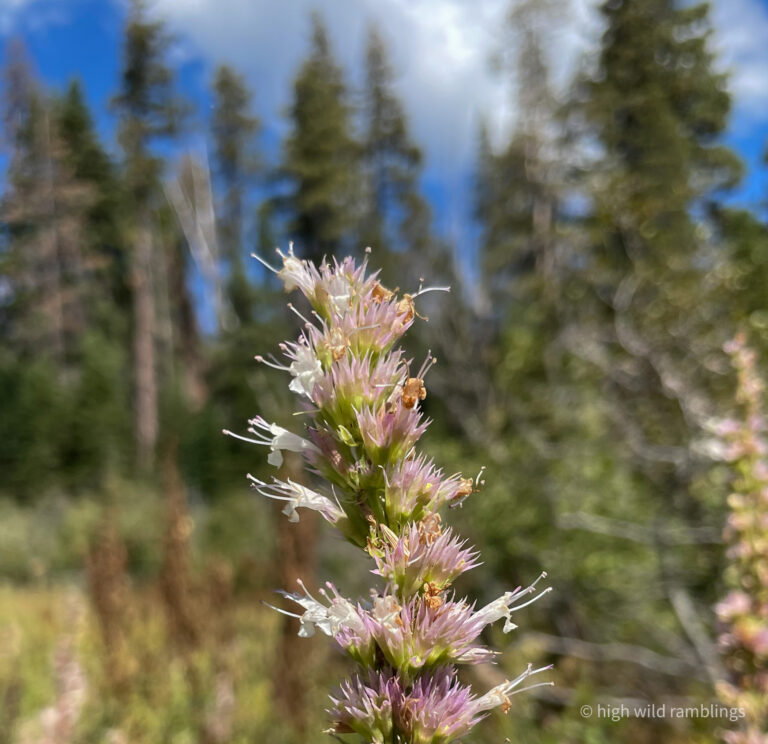
Horsemint or Giant Hyssop (Agastache urticifolia), Lamiaceae family
Horsemint or Giant Hyssop (Agastache urticifolia), Lamiaceae family
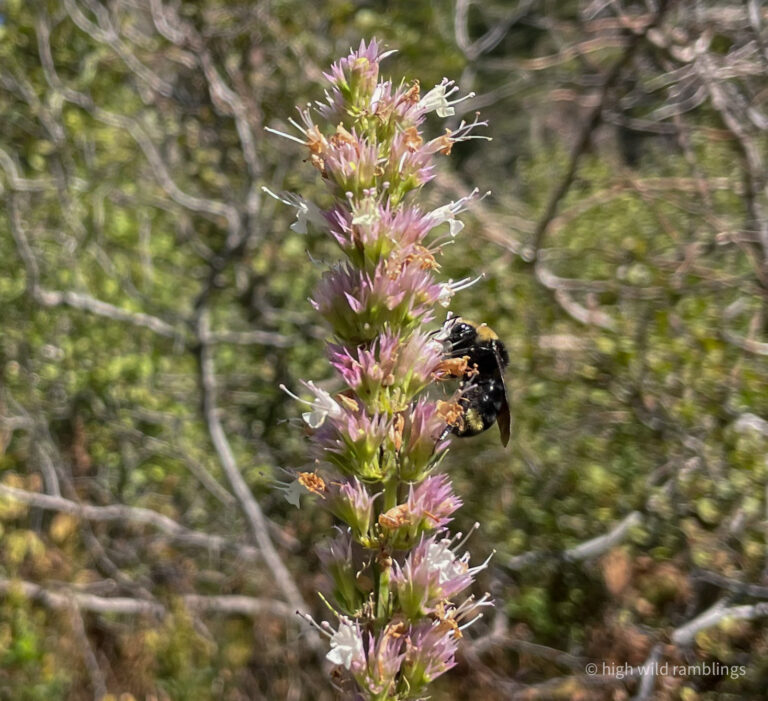
Horsemint or Giant Hyssop (Agastache urticifolia), Lamiaceae family, with pollinator
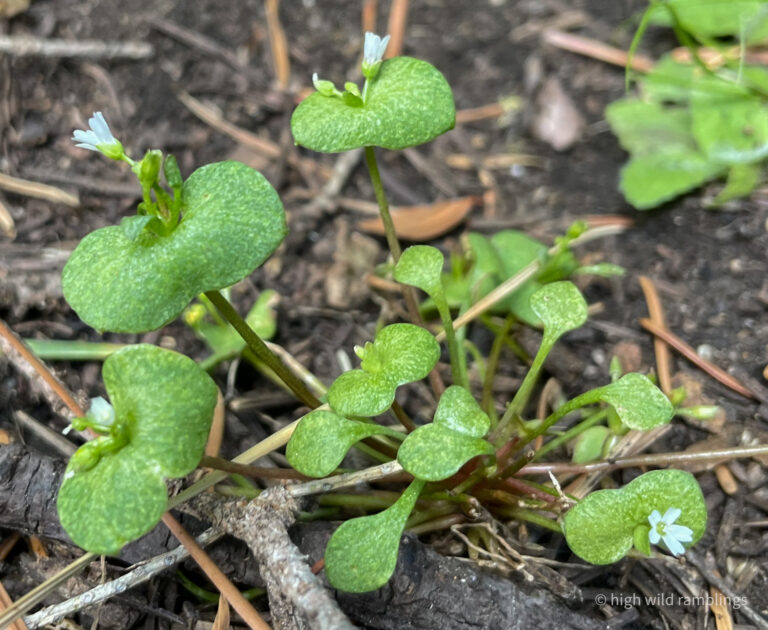
Miners Lettuce (Claytonia rubra ssp. rubra), Montiaceae (Portulacaceae) family
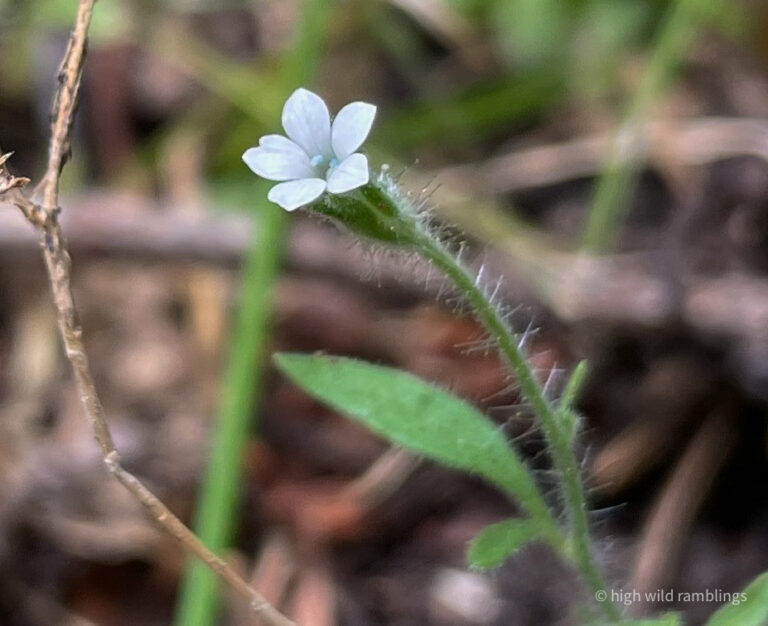
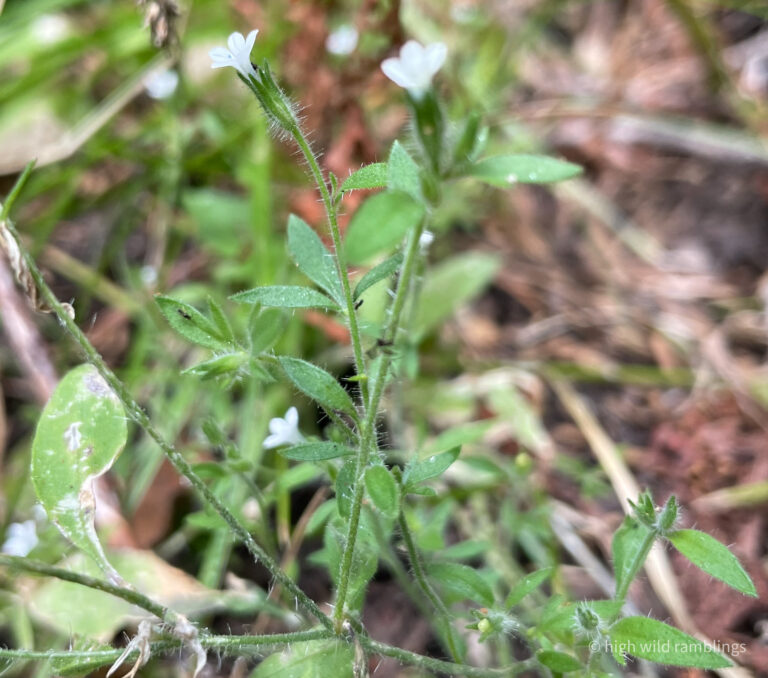
White Allophyllum or False Gilyflower (Allophyllum integrifolium), Polemoniaceae family
White Allophyllum or False Gilyflower (Allophyllum integrifolium), Polemoniaceae family
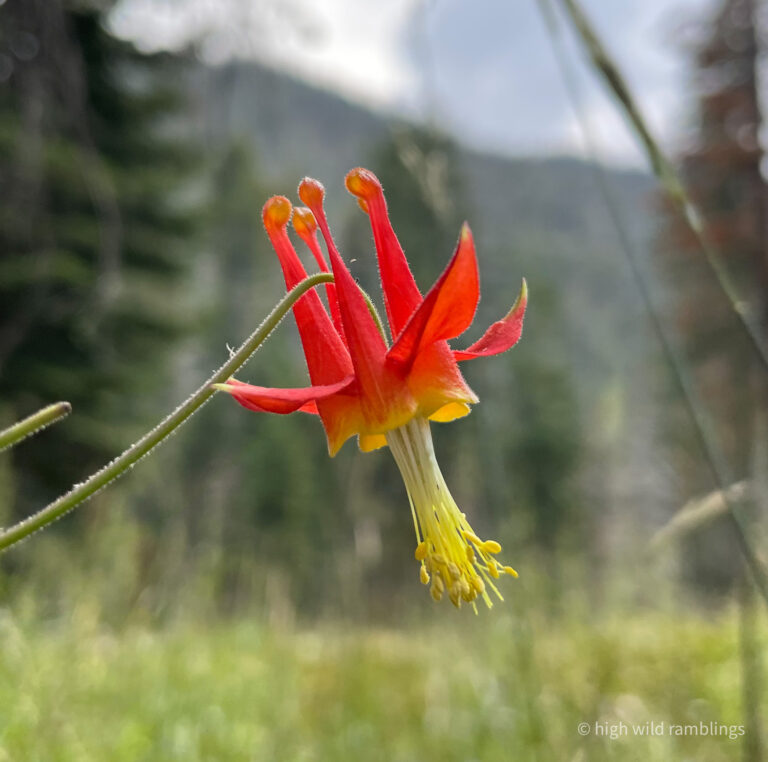
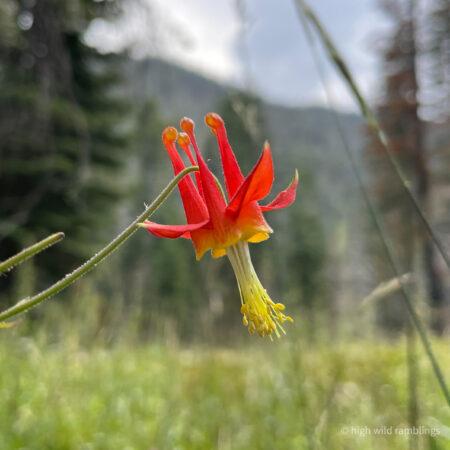
Crimson Columbine, Aquilegia formosa, Ranunculaceae family
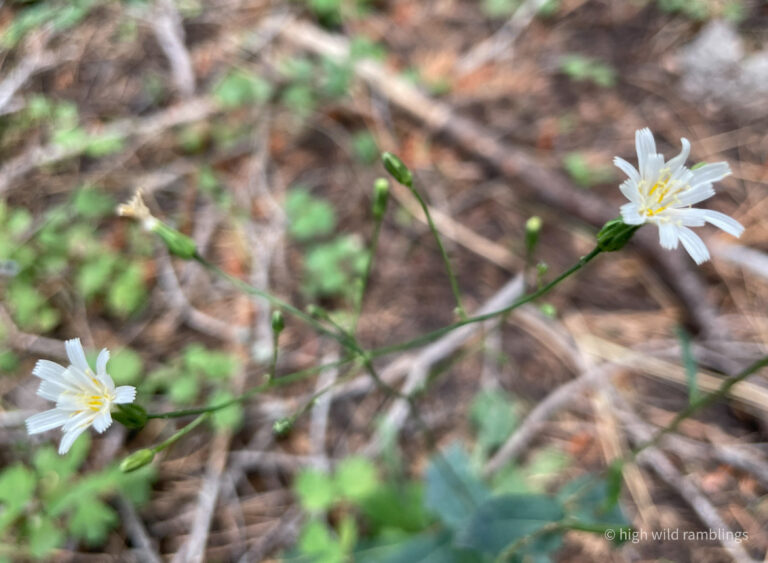
White Hawkweed (Hieracium albiflorum), Asteraceae family
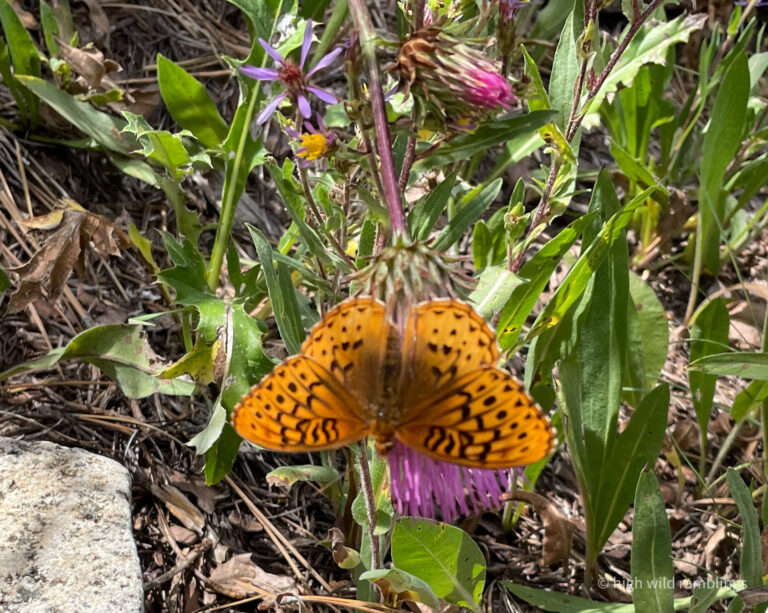
Fritillary (Speyeria) on Andersons Thistle
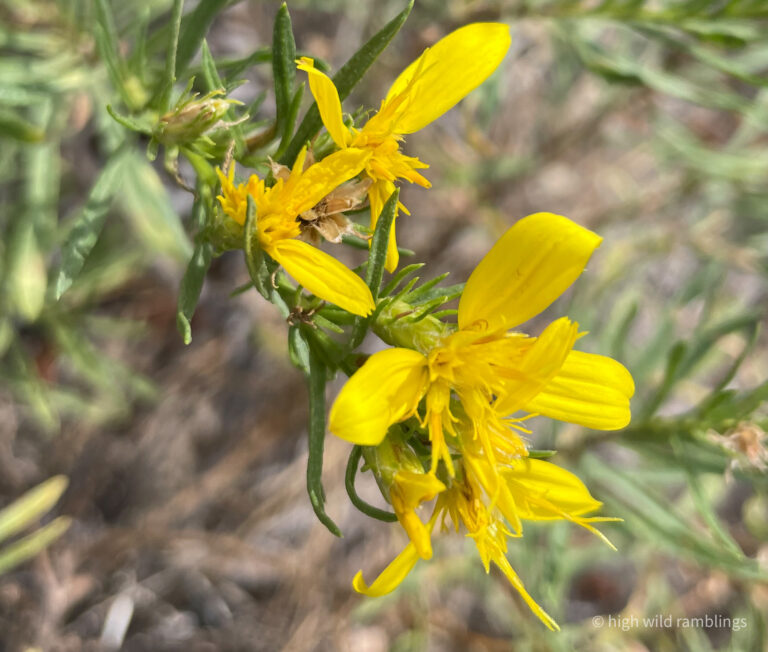
Rubber Rabbitbrush (Ericameria nauseosa), Asteraceae family
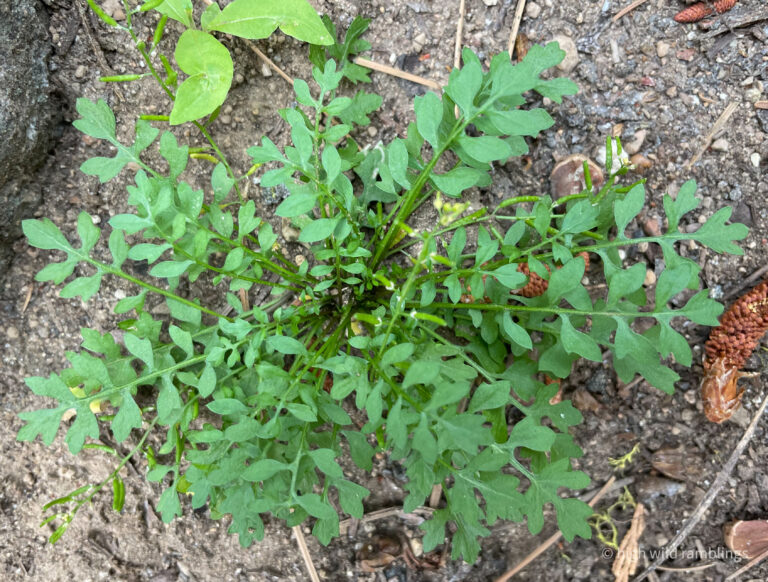
Curvepod or Western Yellow Cress (Rorippa curvisiliqua), Brassicaceae