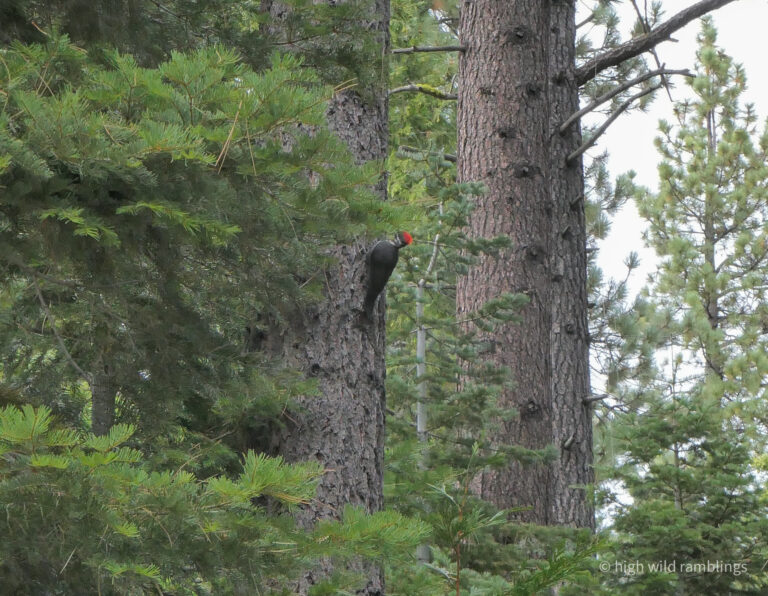
Pileated Woodpecker (Dryocopus pileatus) She announces her arrival with her brash dinosaur cackle, larger than life, ‘The Queen is in the house, babies’, strutting and gesticulating, hopping vertically up or down the trunks, pushing off her stiff tail feathers, with formidable core strength. There’s a grace and gravitas in the way she carries her latent jackhammer power. Pileateds are apparently the largest surviving woodpeckers in North America, and seem to know it.
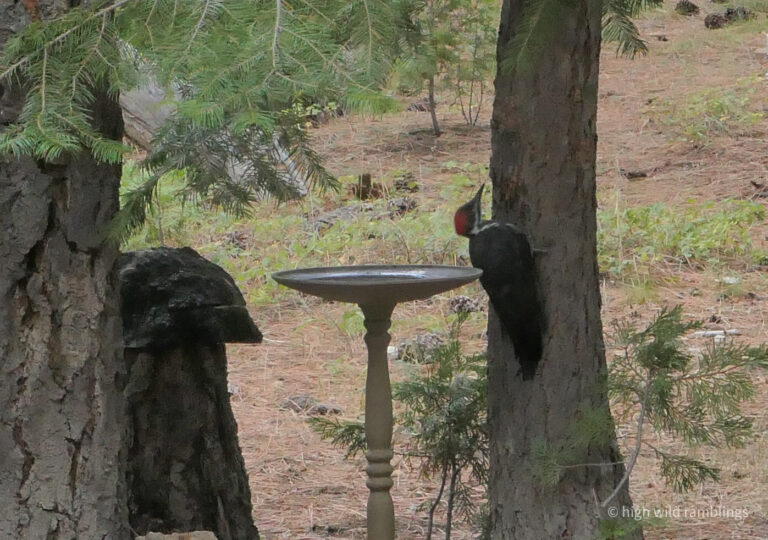
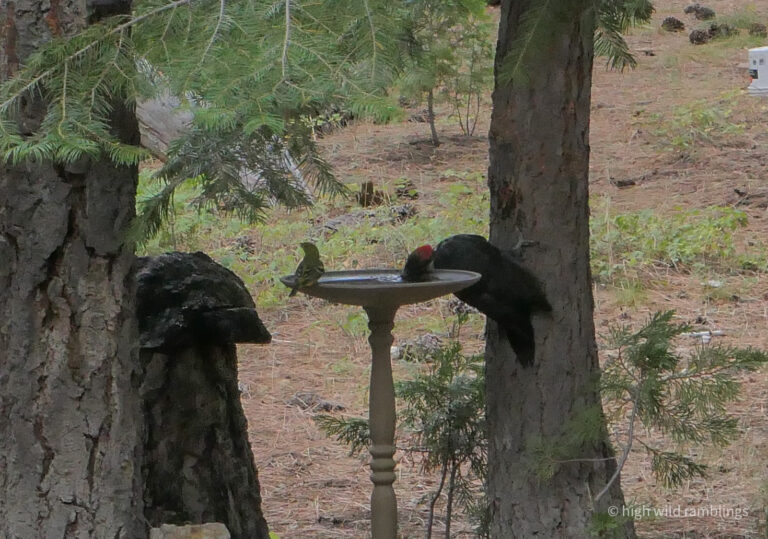
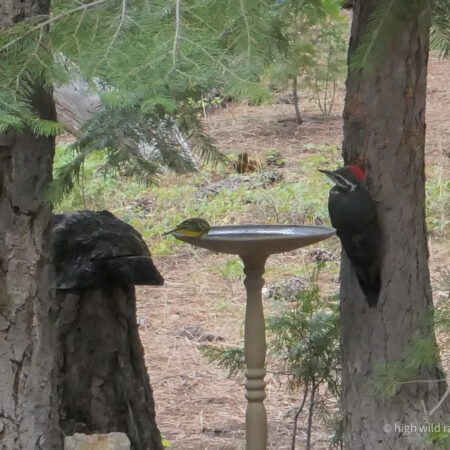
Female Pileated Woodpecker (Dryocopus pileatus) at our bird bath, dignified Queen of this wood. You know it’s dry around here, for her to subject herself to such an indignity. She’ll drink from it, but she won’t perch on it. Her feet are evolved for hanging to vertical trunks. Males can be distinguished by their greater size and a red stripe on their cheek.
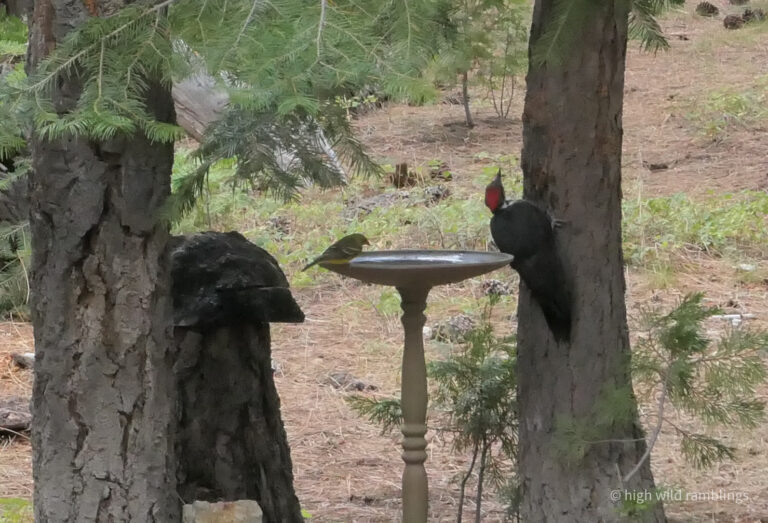
The majestic Pileated doesnt mind a little company though, likely a Yellow-rumped Warbler (Dendroica coronata). There have been Pileateds living in the dead crown of an otherwise healthy five foot diameter Cedar behind the house for decades. The dead branches of differing scale up top are like a marimba, making a variety of tones when drummed upon, which the Pileateds put to good effect.
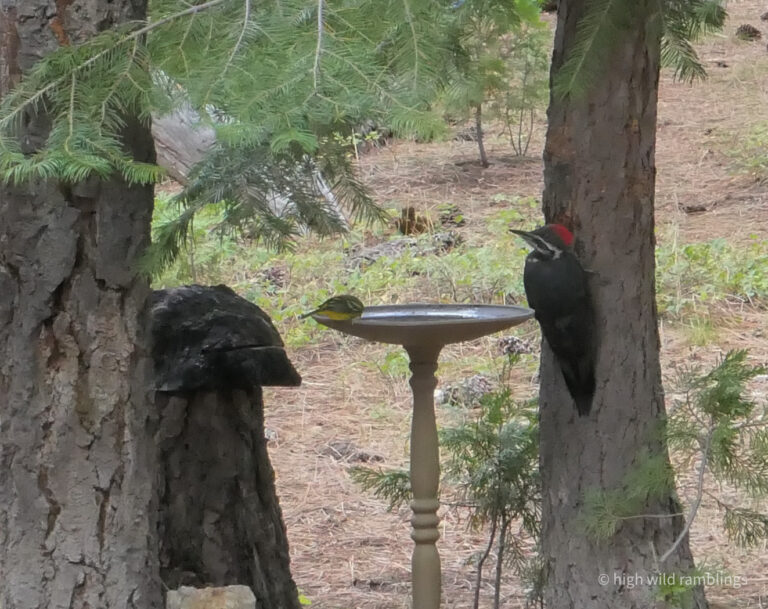
Female Pileated Woodpecker (Dryocopus pileatus) and likely Yellow-rumped Warbler (Dendroica coronata). Pileateds are zealous in their pursuit of bugs in rotting trees, excavating large, rectangular holes to access insect galleries, leaving behind cavities that numerous other birds and critters use for nesting and protection from the elements. They perform a vital service for their communities in this respect.
Female Pileated Woodpecker (Dryocopus pileatus) and likely Yellow-rumped Warbler (Dendroica coronata). She uses her long tongue to draw the water in.
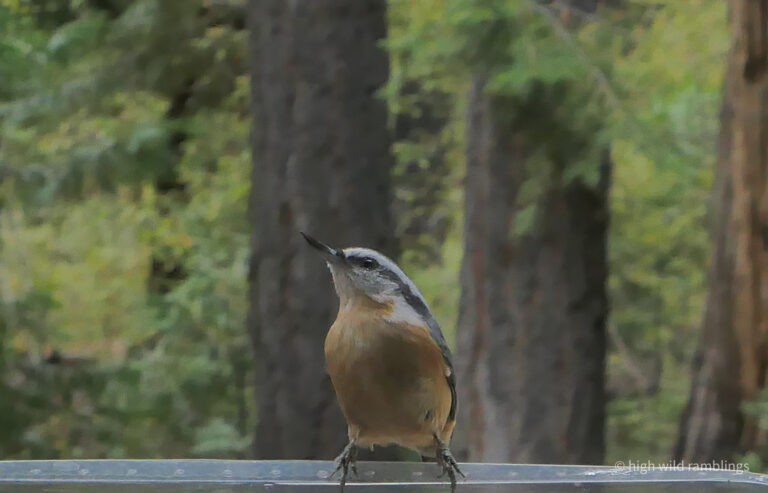
A Red-breasted Nuthatch (Sitta canadensis) meets my eye. The birds know quite well that we provide this water for them. And if we forget to refill it, they generally let us hear about it. The Nuthatches (that’s ‘nut hatch’ Jer, not ‘nut thatch’) have a resonant, sort of nasally voice, as if trying to clear their sinuses. In a slow, monosyllabic, somewhat resigned, minor-key tone, they check in with each other, as they work, inverted, down the tree trunks, poking and probing into crevices, looking for bugs or hidden seeds or fungi. They are part of the chatty little coterie that does our tree maintenance here in the neighborhood, along with the Brown Creepers (Certhia americana) working the other way, up the trunks instead of down, without colliding, and the ebullient Mountain Chickadees (Poecile gambeli) flitting antically in the boughs, and the mincing tsk-tsk call of the ground canvassing, Dark-eyed Juncos (Junco hyemalis), all trading tips and updates on who’s finding what, with the usual chattering forest gossip, the joyful dawn chorus, coffee clatch. Life is simple and good here out in the woods.